
Why a Warm Drink Feels So Comforting: The Wellbeing Science of a Simple Ritual
There's a reason that, in moments of stress, somebody puts the kettle on. Across cultures and generations, the warm drink shows up as a near-universal gesture of comfort. A cup of tea after bad news. Cocoa on a cold evening. Coffee shared across the table at a difficult conversation. It's such a familiar reflex that we rarely stop to ask why it works, which is a shame, because the answer turns out to be more interesting than "it just does."
So let's actually take it apart. Not to spoil the magic, but because understanding the small mechanisms underneath a warm mug is the surest way to get more out of it. None of this requires you to believe anything special about the drink. The comfort is real, and it comes from a handful of ordinary things stacked neatly on top of each other.
The Simple Pull of Warmth
Start with the most obvious thing: the warmth itself. Holding something warm is a physical sensation we associate, from our earliest days, with safety and care. Long before language, warmth meant being held, being fed, being close to another body. That association never fully leaves us. A warm mug taps straight into it.
There's an intuitive logic everyone feels here. Cold makes us tense and brace; the shoulders rise, the breath shortens. Warmth invites the opposite. Wrapping your hands around a hot cup is a small, direct way of giving your body the cue that it's alright to soften.
It's worth being honest about how far the science actually goes, because this is a corner of psychology that got ahead of itself for a while. A widely cited 2008 study by Lawrence Williams and John Bargh, run on just 41 participants, found that people who briefly held a cup of hot coffee rated a stranger as having a "warmer" personality than those who'd held an iced cup, the suggestion being that physical warmth and social warmth share some wiring in the brain. It's a lovely idea. It's also one that later, much larger attempts struggled to confirm: a field replication with more than triple the original sample, 128 and 177 people, found close to no effect, and a multi-site replication pooling 861 participants across three independent labs came up empty too, so the strong version of the claim hasn't really held up.
Note. When you read that a "study proves" some neat psychological effect, it's worth a moment's caution, especially with small, surprising results. The careful version of the warmth story is gentler: we have deep, lifelong associations between physical warmth and comfort. That's enough. The mug in your hands doesn't need a headline to do its quiet work.
What's beyond dispute is the bodily part. Warmth on the skin is relaxing, the same way a hot bath or a heat pack on a sore shoulder eases tension. Your hands are dense with nerve endings, and a steady, gentle heat is exactly the kind of input the nervous system reads as safe. That alone is reason enough to reach for the kettle.
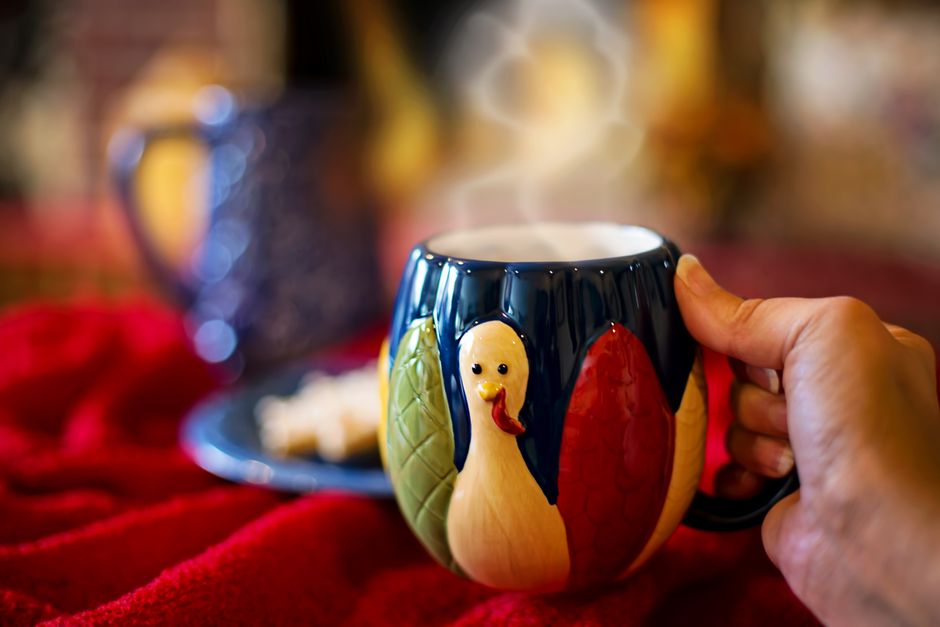 Warmth on the skin is one of the simplest cues the body reads as safe.
The Pause Built Into the Process
A warm drink isn't instant, and that turns out to be a feature, not a flaw. You have to stop and make it. Fill the kettle. Wait for it to boil, typically around 100 °C. Let the tea steep, black tea wants 3 to 5 minutes near boiling, green tea more like 2 to 3 minutes at a gentler 70 to 80 °C, or let the coffee brew. The whole sequence is a small enforced pause dropped into the middle of whatever was stressing you.
That pause does quiet work. It interrupts the momentum of a difficult moment and hands you something simple and contained to focus on instead. Watching the kettle, listening for the click, deciding which mug. By the time the drink is ready, you've already stepped slightly out of the rush, almost without noticing you did.
This matters more than it sounds, because most stress feeds on momentum. A racing mind wants to keep racing; one anxious thought hands off to the next. A genuine break in that chain, even a couple of minutes, gives the spin a chance to lose speed. The drink is a built-in excuse to step off the treadmill, and the few minutes it takes to make are often where the real settling happens.
There's a reason so many calming practices are really just ways of inserting a deliberate pause. If you've ever read about building a five-minute reset you can do anywhere, you'll recognise the shape of it. The warm drink is one of the oldest, most reliable versions of that idea, no instruction required.
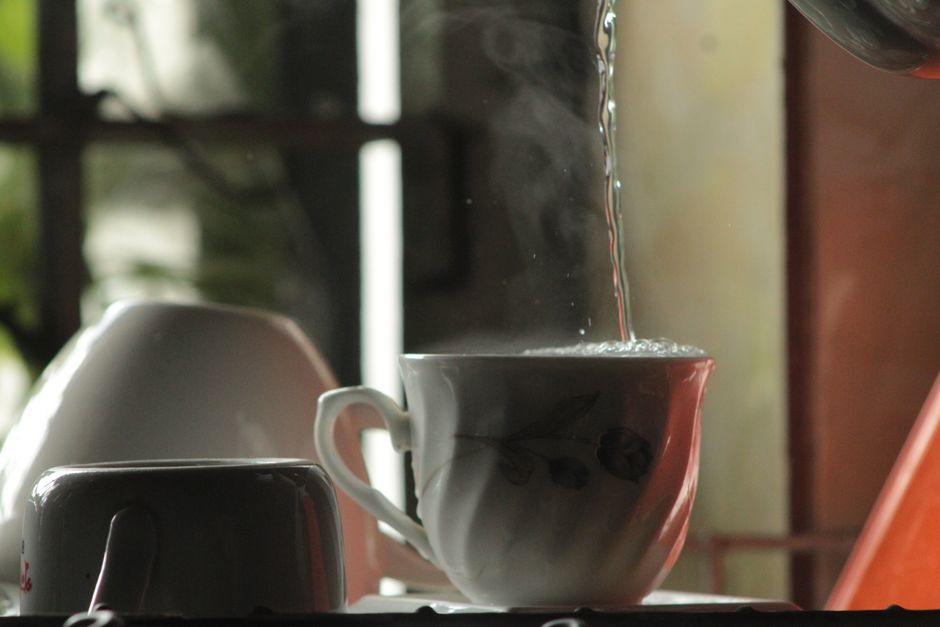 The making is the pause; the waiting is the point, not the delay.
Ritual and the Comfort of the Familiar
Then there's the ritual of it. Most of us have a particular way we make our drink. A favourite mug, the one with the chip in the handle you've decided you like. A usual spot to sit. The same three steps in the same order. These small, repeated patterns are deeply soothing precisely because they're familiar, and familiarity is one of the most underrated calming forces we have.
The reason is straightforward. The nervous system is, more than anything, a prediction machine. It's constantly scanning for what's coming next, and uncertainty keeps it on alert. A predictable sequence, by contrast, is reassurance in motion. Nothing here is going to surprise you. Your hands know the moves. In an uncertain moment, the steady, well-worn steps of making a cup offer something dependable to hold onto, and that predictability is doing as much work as the drink itself.
This is part of why the same drink can feel more comforting at home than anywhere else. It isn't just the beverage; it's the whole familiar choreography around it, a routine your hands could perform half-asleep. It's also why we get oddly particular about it. The "wrong" mug or someone else's method can leave a drink feeling subtly off, even when the tea is identical. We're not being fussy. We're responding to a broken pattern.
If you want to dig into why this works, it's the same principle behind why routine helps us feel safe more broadly. The warm drink is simply one of the smallest, most portable routines we own.
A ritual doesn't have to be elaborate to count. The most powerful ones are usually the plainest: the same kettle, the same chair, the same quiet two minutes you've performed a thousand times.
The Drink as a Permission Slip
Here's a subtler reason the ritual works, and one I think gets overlooked. Making a warm drink gives you permission to stop.
Most of us are bad at sitting still and doing nothing. It feels indulgent, even faintly guilty, like we ought to be getting on with something. But sitting with a cup of tea feels allowed. It reads as a legitimate activity, almost productive. Nobody questions the person nursing a coffee; the cup is a small social and personal alibi for the pause you actually needed.
In that sense the drink is half a prop. What you're really after is the few minutes of stillness, and the mug is the thing that makes those minutes feel earned rather than stolen. It's a clever bit of self-permission, the same trick we use when we say we're "just going for a walk" when really we need to think, or step out to "get some air." The errand is cover for the rest.
Once you notice this, you can use it on purpose. If you struggle to give yourself genuine downtime, the warm drink is a gentle way in. The point was never the tea. The tea is how you give yourself the half-hour without arguing about whether you deserve it. There's a whole quiet argument worth having here about why you don't need hours of free time to unwind, and the mug is exhibit A.
A Word on What's Actually in the Cup
It would be dishonest to pretend it's all psychology and warmth. What's in the mug matters too, and the effects are real, if often smaller and slower than the marketing suggests.
Tea is the most interesting case. A cup of black tea carries roughly 40 to 70 mg of caffeine, well under the 90 to 120 mg in a cup of coffee, and green tea sits lower still, around 20 to 45 mg. Alongside that modest caffeine, tea contains an amino acid called L-theanine, and there's reasonable evidence that L-theanine nudges the brain toward a calmer, more relaxed-but-alert state, partly by boosting the kind of alpha brain-wave activity associated with quiet wakefulness. Studies using a 200 mg dose, more than a single cup of tea actually delivers, find alpha activity rising within 30 to 60 minutes and staying elevated for up to eight hours. It's part of why a cup of tea can feel steadying in a way that a strong coffee, all caffeine and no counterweight, sometimes doesn't. Worth keeping in mind that the clearest research effects tend to come from doses a little higher than a single cup delivers, so don't expect a switch to flip. It's a gentle lean, not a sedative.
Which drink suits the moment is worth a thought rather than a habit:
| Drink | What it tends to offer | Best moment |
|---|---|---|
| Black or green tea | Mild lift with L-theanine's softening counterweight | Mid-afternoon dip, a steadying break |
| Herbal infusion (chamomile, rooibos, mint) | Caffeine-free warmth and ritual | Evening, winding down before bed |
| Warm milk or cocoa | Comfort, sweetness, strong childhood associations | Cold nights, low mood, bedtime |
| Coffee | Sharp alertness, social warmth | Morning, or a shared pause with someone |
The honest summary: the chemistry is a real but modest part of the picture. If you're reaching for a warm drink late in the evening to settle, an herbal cup spares you the caffeine while keeping everything that actually does the soothing, the warmth, the pause, the ritual, fully intact.
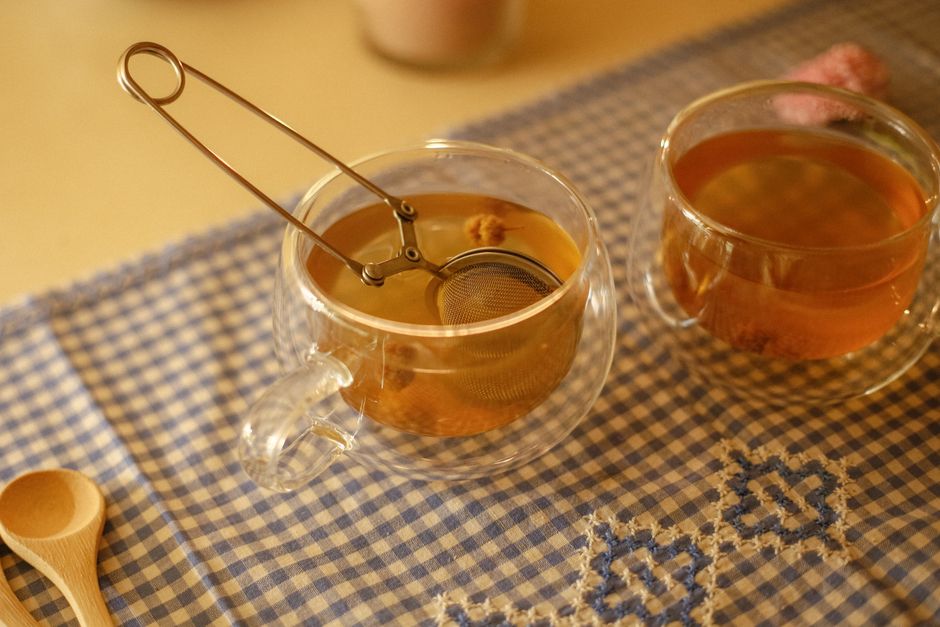 In the evening, a caffeine-free infusion keeps the ritual without the lift.
Pairing the Pause With an Anchor
The warm drink works partly because it's an anchor, a simple sensory thing that signals to the body that it's time to settle. And anchors stack. The more cues you gather into one moment, the louder the message gets.
Many people pair their tea with another small signal: a particular chair, a soft lamp instead of the overhead light, a calming object kept within reach, a Relief Disc resting on the table beside the mug. Each of these on its own is a faint nudge. Together they become something closer to a clear instruction. This is the part of the day where we stop.
The mechanism is association, plain and repeatable. The more consistently your mind links a particular sequence with settling, the more readily it settles when you begin it. After enough evenings, simply filling the kettle starts to trigger the wind-down before the drink is even made, because your nervous system has learned what comes next. The warm drink is often the first link in that chain, the thing that sets the whole gentle process in motion.
If you want to build this deliberately, it's the same logic behind a good evening wind-down routine. You're not relying on willpower to relax. You're laying down a path your body can follow on its own.
Making the Ritual Count
If you'd like to get more from a habit you almost already have, here's a simple way to be a little more deliberate about it:
- Pick a consistent cue. The same mug, the same spot, ideally the same rough time of day. Repetition is what turns a drink into an anchor.
- Let the making be part of it. Don't rush the kettle or scroll while it boils. The waiting is the pause; treat it as the point, not the delay.
- Sit down with it. A warm drink consumed standing at the counter between tasks is just fuel. Sitting, even for five minutes, is what makes it rest.
- Put the phone out of reach. The whole effect depends on a break in the input. A cup in one hand and a feed in the other cancels itself out.
- Match the drink to the hour. Caffeine in the morning, something gentler as the evening draws in. Let the cup support the time of day rather than fight it.
None of this is precious or complicated. It's the difference between gulping something hot on autopilot and letting the ritual do what it's quietly good at.
 Sitting down with it, phone out of reach, is what turns a drink into a pause.
When the Mug Isn't Enough
It's worth saying plainly: a warm drink is a small comfort, not a cure. It's wonderful for the ordinary friction of a hard day, the bad news, the long afternoon, the restless evening. It is not a substitute for sleep, for support, or for dealing with whatever's actually weighing on you.
There's also a gentle trap to watch for. Because the ritual is soothing, it's easy to let it stand in for things that need more than soothing. The fifth coffee that's really about avoiding a task. The endless cups that fill an evening you'd rather not sit with. The drink is meant to open a pause, not paper over one. Used well, it's a doorway into rest. Used as a dodge, it just keeps you busy with your hands.
The good news is that the same instinct that reaches for the kettle is usually a reliable signal. When you find yourself wanting a warm drink, it's often your body asking for a pause it already knows it needs. The kindest thing you can do is honour the request fully, sit down, slow down, and actually take the few minutes the cup is offering you.
An Old Ritual Worth Keeping
So none of this is mysterious, and none of it asks you to believe anything special about the drink. The comfort of a warm cup comes from a handful of small, ordinary truths stacked together: the warmth on your skin, the pause built into the making, the steadiness of a familiar pattern, the quiet permission to stop, and, yes, a little real chemistry in the cup.
That's rather reassuring when you think about it. You don't need to learn how to relax with a warm drink, because you already know how. You've been doing it your whole life. What's worth keeping is the awareness of why it works, so that the next time the day gets heavy and someone reaches for the kettle, you can meet the moment on purpose.
Make the cup. Sit with it. Let the kettle's two minutes be a small, deliberate full stop in the middle of everything. It isn't just a habit. It's one of the oldest, simplest, most time-tested ways we have of telling ourselves that it's alright to pause, to soften, and to take a moment before carrying on.