
The Science of Resonance: How Frequency and Vibration Quietly Shape a Room
Stand near a large bell after it's been struck and you'll feel something the ears alone don't catch. The air hums. The sound isn't just heard, it's felt, settling into the chest like a low tide. That sensation is resonance, and once you notice it you start noticing it everywhere.
We tend to think of sound as something that happens to us. But sound is movement, and movement shapes the spaces it travels through.
Vibration, in Plain Terms
Every sound begins with something moving back and forth, a guitar string, a drumhead, the air pushed through your vocal cords. That motion pushes against the air, creating waves of higher and lower pressure that ripple outward until they reach your ear.
The speed of that back-and-forth is frequency, measured in hertz. Slow vibrations produce low, deep tones; fast ones produce high, bright tones. A double bass rumbles. A whistle pierces. Everything you've ever heard sits somewhere on that spectrum.
The Magic Word: Resonance
Here's where it gets interesting. Every object has frequencies it naturally prefers to vibrate at. Send the right sound wave at it and it springs into motion with surprising eagerness.
You've seen this without naming it. A singer holding exactly the right note can set a wine glass humming. A passing truck rattles one particular window while the others stay still. Each has a frequency it's tuned to, and when the world delivers that frequency, it answers.
Resonance is essentially sympathy between objects. One thing vibrates, and another that shares its natural frequency begins to move along with it, without ever being touched.
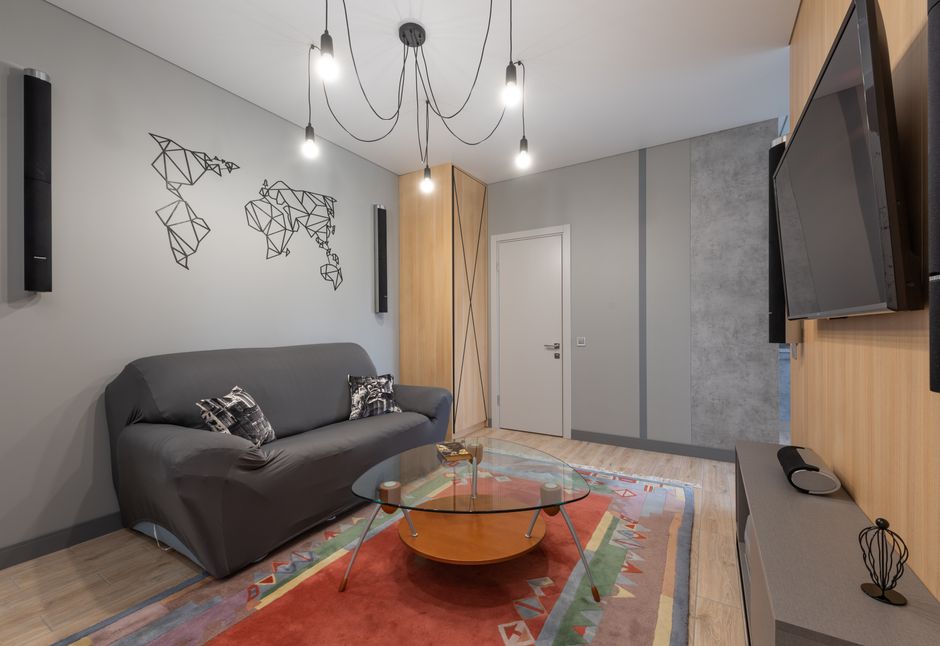 El sonido es movimiento, y ese movimiento da forma al espacio que atraviesa.
How Rooms Have a Voice
Rooms resonate too. The height of the ceiling, the distance between walls, the surfaces in between, all decide which frequencies a space amplifies and which it quietly absorbs. It's why your voice sounds rich in a tiled bathroom and flat in a carpeted bedroom.
Hard surfaces bounce sound back, letting waves overlap and reinforce each other. Soft surfaces, fabric, cushions, rugs, absorb that energy and shorten the echo. A room of bookshelves and curtains feels hushed and intimate; a bare room feels sharp and a little cold. The furniture you never thought of as acoustic equipment is shaping the sound around you all day. The same logic runs underneath why soft, steady sounds help us settle.
Why Some Spaces Just Feel Better
We respond to the acoustic character of a room even when we aren't consciously listening. A long, harsh echo can feel subtly tiring, every clink and footstep amplified. A space that softens sound tends to feel calmer, the edges of noise taken off before they reach you.
You don't need a concert hall to use this. Small changes, a rug here, a shelf of books there, gently retune a space toward comfort, the same way the right quiet corner does.
So next time a room feels especially peaceful, pause and listen to what it's doing with sound. There's a quiet physics at work, shaping how the place feels long before you could explain why.