
The Quiet Comeback of Doing One Thing at a Time
For most of the last two decades, multitasking was a badge of honour. We listed it on resumes, bragged about juggling a dozen browser tabs, and treated the ability to do several things badly at once as a kind of modern superpower. Lately, though, something has shifted. Doing one thing at a time is quietly making a comeback, and it's worth asking why.
This isn't a nostalgia piece longing for a slower century. It's a look at a genuine cultural turn, what the science underneath it actually says, and what the whole thing might be telling us about the way we want to live now.
How We Talked Ourselves Into Doing Everything at Once
The multitasking ideal arrived hand in hand with the devices that promised to enable it. As screens multiplied and notifications became constant, fragmented attention started to feel normal, even virtuous. If the tools let you reply to a message mid-meeting while half-watching a video, surely the efficient thing was to do exactly that.
The trajectory shows up in Gloria Mark's own tracking of office workers: in 2004 the average person stayed on one screen for around 2.5 minutes before switching to something else. By 2012 that had fallen to 75 seconds. By the late 2010s it had dropped to roughly 47 seconds, with half of all screen-attention spans lasting 40 seconds or less. The culture absorbed this quickly. Busyness became a status symbol. The person doing five things looked more important than the person doing one. We stopped noticing how scattered it all felt because everyone around us was scattered in the same way. A full attention span came to seem almost quaint, the mental equivalent of insisting on a paper map.
What Actually Happens When You Split Your Attention
Here's the inconvenient part the productivity boom mostly skipped over: the brain doesn't really do two demanding things at once. A foundational 2001 study by psychologist David Meyer and colleagues found that switching between tasks could eat up as much as 40% of someone's productive time. What we call multitasking is usually fast switching, the mind flicking back and forth between tasks, paying a small toll each time it lands.
That toll has a name. In 2009 the researcher Sophie Leroy described what she called attention residue, the way a slice of your focus stays snagged on the previous task even after you've moved on to the next one. You answer an email, then turn to a report, and part of your head is still drafting that email. The work in front of you gets a diminished version of you.
The 23-minute number. Research led by Gloria Mark at the University of California, Irvine found that after an interruption, it takes an average of around 23 minutes to return fully to the original task. We tend to picture an interruption as a thirty-second detour. The cost runs far longer than the moment itself.
Stack enough of those switches into a day and the maths gets bleak. If your attention is fragmenting every few minutes, you may never reach the depth where good work, or genuine rest, actually lives. The exhaustion isn't from doing too much. It's from starting things over and over and rarely finishing the climb into focus.
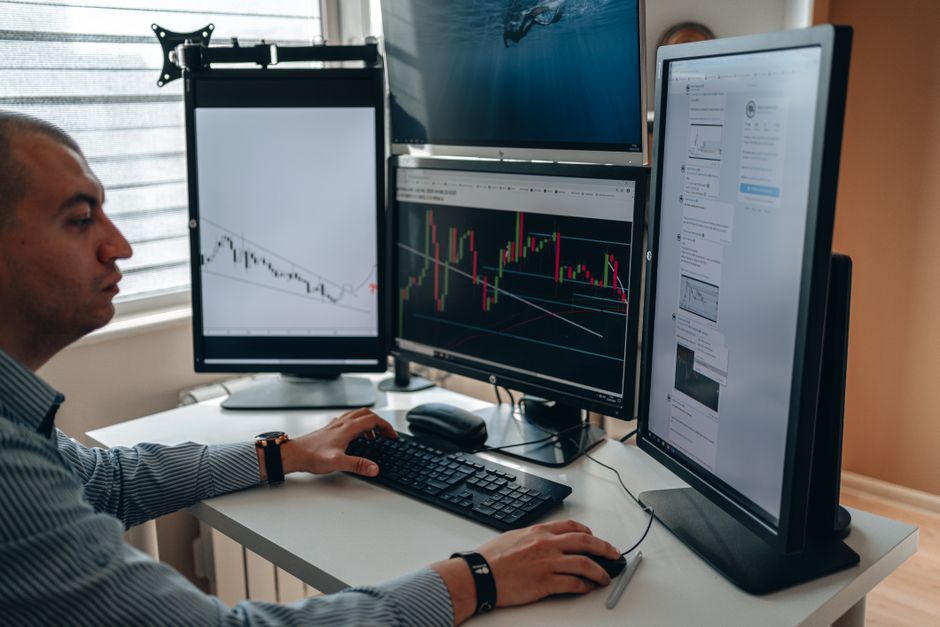 The split-screen day rarely feels as productive as it looks.
The Slow Realisation That Something Was Off
The turn began, as these things often do, with a vague collective unease. People started naming a feeling, the sense of being constantly occupied yet never quite present, of finishing a day full of activity with no memory of having lived it.
Conversations about attention spans, screen fatigue, and the strange exhaustion of always being half-here grew louder. You didn't need a study to feel it; people simply recognised it in themselves. The multitasking dream had delivered a lot of motion and not much of the satisfaction it promised. And once the research caught up and put numbers to the hunch, the unease had something solid to stand on. The scattered feeling wasn't a personal failing. It was the predictable result of a way of working that fought against how attention actually behaves.
Why Single-Tasking Resonates Now
Against that backdrop, doing one thing at a time started to feel almost radical. Cooking without a podcast. Walking without a phone. Having a conversation without a screen glowing in your peripheral vision. These small acts began to look less like inefficiency and more like a form of resistance.
The appeal is partly about relief. There's a real ease that comes from giving one task your whole attention, a sense of the mind unclenching that the scattered alternative never offers. People are rediscovering that doing one thing fully is often more pleasant, not just more productive, than doing several things partially. It scratches the same itch as the broader move toward building real rest into the week: less about squeezing more in, more about being present for what's already there.
It also sits neatly inside the wider rise of a rest economy, the slow swing back toward things that ask less of us rather than more. Single-tasking is that same instinct turned inward, applied not to what we buy but to how we spend an hour.
A Few Ways to Bring It Back
None of this requires a productivity overhaul or a new app. Single-tasking is mostly about removing things rather than adding them. A handful of small moves tend to do the heavy lifting:
- Pick one anchor task and close the rest. Before you start, physically shut the other tabs and turn the phone face down. Out of sight helps; the brain stops half-monitoring what it can't see.
- Batch the small stuff. Instead of answering messages the instant they arrive, gather them into two or three windows a day. Each saved switch is a saved slice of that refocus tax.
- Give the task a setting. A cleared surface, a warm drink, a single object you reach for to mark "this is the thing now." Cues like these tell the body the mode has changed, much like the small signals in a calming evening routine tell it the day is closing.
- Let one moment stay undefended. A walk with no podcast, a meal with no screen. You're not being inefficient; you're practising the thing the scattered day forgot how to do.
The point isn't rigid discipline. It's noticing how much lighter a task feels when it's the only one in the room.
 One task, given the whole of your attention, tends to feel like a relief rather than a restriction.
A Cultural Mood, Not Just a Productivity Hack
It would be easy to file all this under life-hacks and time-management tips, but that misses what's actually happening. The return to single-tasking reflects a deeper shift in what people say they want from their days. Not more output, but more presence. Not the feeling of having done everything, but the feeling of having actually been there for any of it.
You can see it in the broader cultural pull toward slowness, toward unplugged hours, toward objects and rituals that mark a single moment as worth full attention. A familiar calming item set beside you, a Relief Disc on the desk, a candle lit for one task, becomes a small way of saying: this, right now, is the only thing.
A Few Honest Questions
Isn't multitasking sometimes faster, though? For routine, low-stakes things, sure, folding laundry while a podcast plays costs you nothing. The trouble starts when two tasks both want real thought. There, switching doesn't double your output; it halves your attention and stretches the work out, thanks to the residue that lingers after each jump.
Doesn't single-tasking just mean I'll get less done? Usually the opposite. Finishing one thing cleanly, then the next, tends to beat keeping six things half-open all day. What feels slower in the moment often turns out quicker by evening, with far less of the frazzled aftertaste.
What if my work demands I juggle? Plenty of jobs do. The aim isn't purity, it's reclaiming the pockets you can. Even one protected hour, or a screen-free meal, gives the mind a taste of undivided focus, and that taste tends to spread once you notice how good it feels.
What the Comeback Really Signals
The quiet rediscovery of doing one thing at a time isn't really about tasks at all. It's about a generation, several of them really, deciding that fragmented attention is too high a price for the illusion of productivity. We tried living everywhere at once and found it strangely lonely.
Whether single-tasking becomes a lasting value or just a passing mood remains to be seen. But the fact that it resonates so widely tells us something hopeful. People still crave the simple richness of being fully present for one thing, and they're starting to give themselves permission to want it. That, more than any technique or number, may be the real story here.